Collaboration

Partnerships for research, development, and technology transfer – from collaborative projects to tailored innovation solutions.

About SAL

Insights into SAL’s mission, values, research activities, and contribution to Europe’s innovation ecosystem.

Digineuron

The project DIGINEURON is inves­ti­gating neuro­mor­phic approaches to enable Neural Network process­ing in portable elec­tronic systems, begin­ning with event based and time coding digital archi­tec­tures.

Project goals

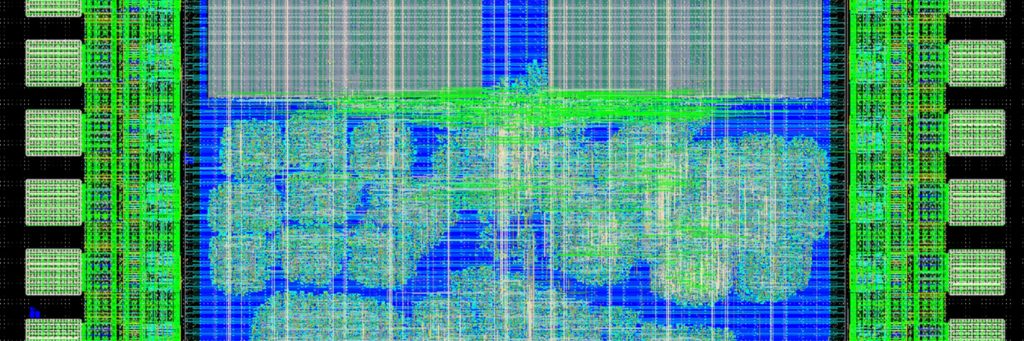
This project aims to obtain compact and powerful archi­tec­tures to imple­ment Neural Networks on chip. The combined used of time encoding, through an appro­priate nonlinear encoding of inputs, compu­ta­tion in time and event-based process­ing can lead to new Neural Network archi­tec­tures, which are more compact in area and require less energy than conven­tional vector-vector prod­ucts or spike-based compu­ta­tion.

The main objec­tives of this project are large event-based neural networks on chip when the stimuli are sparse in time with the aim of reducing the computing energy and area, time-based coding in hard­ware using memory-based compu­ta­tion, thus avoiding the use of multi­pli­ca­tions that take up most of the space in IC designs and building a demon­strator with a System-on-chip (SoC) imple­menting a camera plus dedi­cated accel­er­a­tors, and an FPGA mounted on a dedi­cated PCB that will also host the optics for the camera. To achieve that, basic algo­rithms will be simu­lated to compare different alter­na­tives and estab­lish a compar­ison at a high level of abstrac­tion.

The imple­men­ta­tion and training of NN will be performed in PyTorch and other similar open plat­forms. Also, analog and mixed signal circuits will be designed and simu­lated at the schematics level in the Cadence / Synopsys plat­forms avail­able at Silicon Austria Labs. The work carried out in this project lays the foun­da­tion for several appli­ca­tions in 6G Systems, Industry 4.0, IOT, remote sensing, Ultra­sound sensing and medical appli­ca­tions and commu­ni­ca­tions with strict energy and compu­ta­tional constraints. The IC cores devel­oped for DNNs can act as a general frame­work for inte­grating intel­li­gence on to the chip and to realize several ad-hoc IoT based appli­ca­tions.

Project Consortium

Project
facts

Title: Digital Neural Network Archi­tec­tures for Low Power IoT Devices

Program: SAL Strategic Re­search Project

Project duration: 12 months

Project start: June 2021

Similar Projects

Discover more projects with similar focuses and technologies.

MUSIC

MUSIC aims to develop materials, process integration technologies, and methods for employing novel materials like AlScN, which can replace lead-containing materials in piezoelectric components. …

Aeromic

As part of the project, innovative wall-mounted microphone sensors and ultra-thin sensor arrays were developed to measure pressure fluctuations on aircraft surfaces, both in the wind tunnel and during flight tests….

FAMES

The FAMES pilot line is a cooperative initiative under the European Chips Act to develop advanced 10 nm and 7 nm FD-SOI technologies for innovative semiconductor applications. It brings together European partners to foster a freely accessible manufacturing ecosystem. Within the project, SAL is developing self-biased magnetic circulators intended for integration into the 22 nm FDX FD-SOI technology provided by CEA-LETI….

Contact

Business Development
Dipl.-Ing. Stefan Wimmer
Business Development Intelligent Wireless Systems
Linz

Newsletter

Our Science & Stories newsletter provides the latest news, bietet aktuelle Neuigkeiten, Forschungshighlights und spannende Einblicke
von Silicon Austria Labs – direkt ins Postfach.