Collaboration

Partnerships for research, development, and technology transfer – from collaborative projects to tailored innovation solutions.

About SAL

Insights into SAL’s mission, values, research activities, and contribution to Europe’s innovation ecosystem.

REDSEL

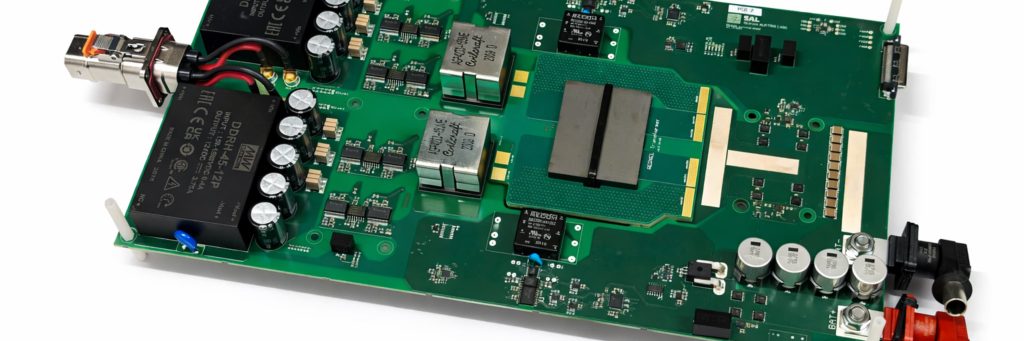
The re­search focus of this project is on inves­ti­ga­ting novel concepts and archi­tec­ture for safe, reliable, and effi­cient high-voltage/​low-voltage onboard power network systems. The diffe­rent concepts are evaluated for specific opera­ting condi­tions, and the most suitable one is imple­mented in the form of a demons­trator.

Project goals

  • Deve­lop­ment of a novel high-voltage–to–low-voltage onboard power network archi­tec­ture with a focus on redun­dant system supply.
  • This redun­dancy requires a safe shut­down func­tion, based on a new system concept in which semi­con­ductor swit­ches are used instead of mecha­nical relays.
  • The use of multi-input power elec­tronic conver­ters is planned, rather than incre­a­sing the number of indi­vi­dual DC/​DC modules, thereby redu­cing the overall size and weight of the system.


The incre­a­sing demand and conti­nuously evol­ving regu­la­tory requi­re­ments for comp­li­ance with CO₂ emis­sions have prompted various auto­mo­tive original equip­ment manu­fac­tu­rers (OEMs) to rethink key aspects of energy distri­bu­tion within electric vehi­cles. However, a unified approach to energy supply—covering not only electric motors but all vehicle subsys­tems—has yet to emerge. This situa­tion is further exacer­bated by the signi­fi­cant increase in power demand and system relia­bi­lity requi­re­ments of future vehi­cles.

While vehi­cles with internal combus­tion engines have tradi­tio­nally required power levels between 600 W and 3 kW, future vehi­cles are expected to demand signi­fi­cantly more than 3 kW due to addi­tional func­tio­na­li­ties (e.g., auto­no­mous driving). It is evident that incre­a­sing vehicle func­tio­na­lity places a substan­tial burden on the low-voltage onboard power network. These addi­tional requi­re­ments prima­rily have a nega­tive impact on the relia­bi­lity of electric vehi­cles, which is a critical safety-related factor—parti­cu­larly for auto­no­mous vehi­cles—and neces­si­tates new, more reliable archi­tec­tures.

Within this project, diffe­rent concepts are evaluated for specific opera­ting condi­tions and assessed accor­ding to criteria such as relia­bi­lity and effi­ci­ency, while also conside­ring the trade-off between relia­bi­lity and addi­tional size and weight.

Further­more, a compa­ra­tive analysis of the concepts aims to deter­mine whether a system has the poten­tial to comple­tely replace the low-voltage battery, thereby further redu­cing weight and impro­ving the overall effi­ci­ency of electric vehi­cles.


Related links


Project
facts

Title: Redun­dant & Effi­cient DC/​DC System for Elec­tro­mo­bi­lity (REDSEL)

Project Manager: Albert Frank

Program: Zero-Emission Mobility

Funding Agency: FFG - Austrian Research Promotion Agency

Project duration: 24 months (since March 2024)

Similar Projects

Discover more projects with similar focuses and technologies.

CHAMP-ION

The CHAMP-ION project, coordinated by Silicon Austria Labs (SAL), delivers the first phase of a seven-year strategic framework partnership agreement (FPA) to establish a sustainable and scalable pilot line network across for ion-trap chips the EU. This network is set to advance ion trap chip innovation and mobilize the European ecosystem to enable high-quality mass industrial production.

EU-TRAINS

EU-TRAINS develops innovative wearables and intelligent textiles with integrated sensors for capturing vital signs – even under demanding conditions such as underwater. The project aims to promote telemedicine, health monitoring, and an active lifestyle, as well as to build a fully European value chain for sensor-based health technologies….

FIRESAT

The project „FIRESAT“ investigates the challenges and benefits of using artificial intelligence (AI) for on-board processing directly on Earth observation satellites. The ESA mission „OPSSAT,“ as well as OroraTech's dedicated CubeSAT platform, will be used for in-flight experiments to demonstrate the feasibility of the use case – satellite-based forest fire detection using on-board AI analysis of live RGB images....

Contact

Business Development
Peter Rechberger MSc
Business Development Power Electronics
Graz
Project Manager
Detective Inspector Albert Frank
Head of Research Unit R&D Services Electronics
Villach

Newsletter

Our Science & Stories newsletter provides the latest news, bietet aktuelle Neuigkeiten, Forschungshighlights und spannende Einblicke
von Silicon Austria Labs – direkt ins Postfach.